

Hey there! As a supplier of Power Distribution Boards, I've seen firsthand how crucial it is to have clear and comprehensive labels on these boards. A well-labeled Power Distribution Board isn't just a nice-to-have; it's a must-have for safety, efficiency, and compliance. So, let's dive into what information should be included in the label of a Power Distribution Board.
Basic Identification Info
First off, the label should have the basic identification details. This includes the name of the manufacturer, which is super important. It gives users an idea of the brand behind the product and the reputation associated with it. For us, we're proud to put our name on every board we supply because we stand by the quality of our work.
Next up is the model number. The model number helps in quickly identifying the specific type of Power Distribution Board. Different models might have different features, capacities, and configurations. It's like a unique fingerprint for the board. Whether it's a small Light Distribution Board for a residential setup or a large industrial Power Distribution Board, the model number tells you exactly what you're dealing with.
Serial number is another key piece of info. It's used for tracking purposes. If there are any issues with the board, the serial number allows the manufacturer to trace back its production details, such as the production date, batch, and quality control checks. This is especially useful for warranty claims and product recalls.
Electrical Ratings
One of the most important aspects of the label is the electrical ratings. This includes the voltage rating. The voltage rating tells you the maximum voltage that the Power Distribution Board can handle safely. If you connect it to a higher voltage source, it can lead to overheating, electrical fires, and damage to the equipment connected to it. For example, a board rated for 230V shouldn't be connected to a 400V supply.
Current rating is equally important. It indicates the maximum amount of current that the board can carry without overheating. Different circuits on the board might have different current ratings, depending on the size of the conductors and the capacity of the protective devices. Knowing the current rating helps in determining the load that can be safely connected to each circuit.
Power rating is also included. It's calculated by multiplying the voltage and current ratings. The power rating gives you an idea of the total power that the board can distribute. This is crucial for planning the electrical load in a building or an industrial facility.
Circuit Details
The label should also provide information about the individual circuits on the Power Distribution Board. Each circuit should be clearly labeled with a unique identifier, such as a number or a letter. This makes it easy to identify which circuit controls which part of the electrical system.
For each circuit, the label should indicate the type of load it's designed for. For example, some circuits might be for lighting, while others might be for power outlets or specific equipment. This helps in preventing overloading of circuits by ensuring that the right type of load is connected to the appropriate circuit.
The circuit breaker or fuse rating for each circuit should also be specified. This tells you the maximum current that the protective device can handle before it trips or blows. It's important to use the correct rating of circuit breaker or fuse to ensure proper protection of the circuit and the connected equipment.

Safety Information
Safety is always a top priority when it comes to electrical equipment. The label should include safety warnings and instructions. This might include warnings about high voltage, the need to use appropriate personal protective equipment (PPE) when working on the board, and instructions on how to safely isolate the power before performing any maintenance or repairs.
There should also be information about the grounding requirements. Proper grounding is essential for protecting against electrical shocks and ensuring the safe operation of the Power Distribution Board. The label should indicate where the grounding connections are located and the recommended grounding procedures.
Installation and Maintenance Instructions
The label should provide some basic installation and maintenance instructions. This includes information about the recommended mounting position of the board. For example, some boards need to be mounted vertically, while others can be mounted horizontally. Incorrect mounting can affect the performance and safety of the board.
It should also include instructions on how to connect the incoming and outgoing cables. This includes the proper torque values for tightening the cable connections to prevent loose connections, which can lead to overheating and electrical fires.
Maintenance instructions are equally important. The label should indicate the recommended maintenance schedule, such as how often to inspect the board for signs of wear and tear, and when to replace the circuit breakers or fuses.
Environmental Information
If the Power Distribution Board is designed for use in specific environmental conditions, the label should include this information. For example, if it's suitable for use in a wet or corrosive environment, the label should indicate the appropriate protection level, such as an IP (Ingress Protection) rating.
The operating temperature range is also important. The board might not function properly if it's exposed to temperatures outside of its specified range. The label should tell you the minimum and maximum temperatures at which the board can operate safely.
Additional Information
Depending on the specific requirements and standards, the label might also include other information. For example, if the board is compliant with certain international standards, such as IEC (International Electrotechnical Commission) standards, the label should indicate this.
There might also be information about the certification bodies that have approved the board. This gives users confidence in the quality and safety of the product.
So, there you have it! These are the main pieces of information that should be included in the label of a Power Distribution Board. A well-labeled board not only makes it easier to operate and maintain but also ensures the safety of everyone using the electrical system.
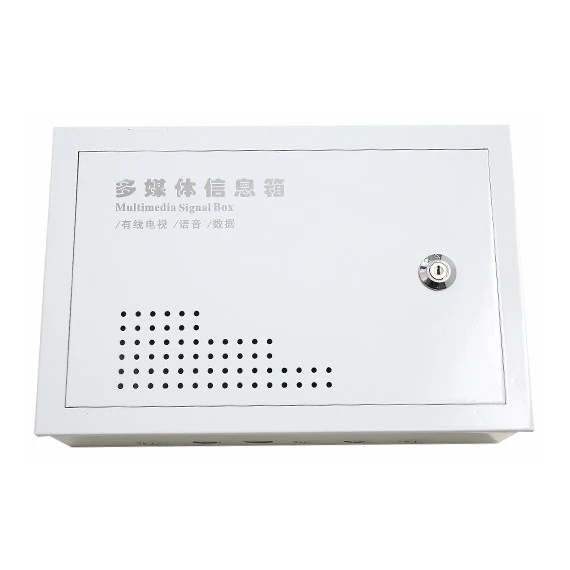
If you're in the market for a high-quality Power Distribution Board or a Structured Wiring Enclosure, we'd love to hear from you. We have a wide range of products to suit different needs and budgets. Whether you're a contractor, an electrician, or a facility manager, we can provide you with the right solution. Don't hesitate to reach out to us for a quote or to discuss your specific requirements. Let's work together to make your electrical system safe and efficient!
References
- Electrical Safety Standards Handbook
- International Electrotechnical Commission (IEC) Publications
- National Electrical Code (NEC)