

Discover the strength behind power with Smurfs Power Limited, your reliable switchgear manufacturer for innovative electrical equipment and comprehensive power solutions. We manufacture and supply a wide range of electrical Equipment, including transformers, circuit breakers, switchgears, prefabricated substations, distribution boards, power cables, and accessories.
Why choose us?
Sales market
We establishing a stable global sales network that connects with businesses in dozens of countries,primarily to developed markets in europe, america, japan, and central & west asia.
Customized services
Our expertise in technology and quality control allows us to deliver high-quality, customized electrical equipment.
Professional services
Regardless of the size of your project, we are committed to providing the best solutions to ensure your electrical system is safe, reliable, and cost-effective.
-
![Miniature Circuit Breakers (MCBs)]() Miniature Circuit Breakers (MCBs)Miniature Circuit Breakers (MCBs) are vital electrical safety devices used in residential, commercial, and industrial settings. They safeguard electrical systems by providing protection againstread more
Miniature Circuit Breakers (MCBs)Miniature Circuit Breakers (MCBs) are vital electrical safety devices used in residential, commercial, and industrial settings. They safeguard electrical systems by providing protection againstread more -
![Moulded Case Circuit Breakers (MCCBs)]() Moulded Case Circuit Breakers (MCCBs)Moulded Case Circuit Breakers (MCCBs) are suitable for AC 50Hz or 60Hz applications, with a rated operating voltage up to 690V and a rated working current ranging from 6A to 1250A in distributionread more
Moulded Case Circuit Breakers (MCCBs)Moulded Case Circuit Breakers (MCCBs) are suitable for AC 50Hz or 60Hz applications, with a rated operating voltage up to 690V and a rated working current ranging from 6A to 1250A in distributionread more -
![Air Circuit Breakers (ACBs)]() Air Circuit Breakers (ACBs)An Air Circuit Breaker (ACB) is a mechanical switching device designed to interrupt electric current. It is primarily used to protect electrical systems' lines and power equipment from hazards suchread more
Air Circuit Breakers (ACBs)An Air Circuit Breaker (ACB) is a mechanical switching device designed to interrupt electric current. It is primarily used to protect electrical systems' lines and power equipment from hazards suchread more -
![Vacuum Circuit Breaker]() Vacuum Circuit BreakerVacuum circuit breakers are equipped with a modular spring-operated mechanism, which ensures high mechanical stability. They can be energized using either alternating or direct current power sources,read more
Vacuum Circuit BreakerVacuum circuit breakers are equipped with a modular spring-operated mechanism, which ensures high mechanical stability. They can be energized using either alternating or direct current power sources,read more -
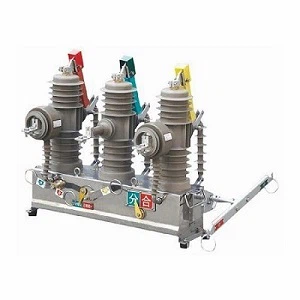
![Outdoor Vacuum Circuit Breaker]() Outdoor Vacuum Circuit BreakerOutdoor pole-mounted vacuum circuit breakers are highly reliable and possess strong breaking capabilities. They can withstand the test of abnormal conditions such as overload and short circuits inread more
Outdoor Vacuum Circuit BreakerOutdoor pole-mounted vacuum circuit breakers are highly reliable and possess strong breaking capabilities. They can withstand the test of abnormal conditions such as overload and short circuits inread more


Types of Circuit Breaker


Voltage
Circuit breakers are differentiated based on their voltage rating, which determines the level of power passing through the breaker:
High-voltage circuit breakers: These are used on power transmission lines and are not for everyday or domestic use (Siemens).
Medium-voltage circuit breakers: Used for units between 1,000 and 72,000 volts, suitable for both indoor and outdoor applications (Eaton).
Low-voltage circuit breakers: Common in most buildings, with the miniature circuit breaker (MCB) being the most prevalent type.
Interruption Mechanism
The interruption mechanism is crucial in determining how circuit breakers cut the flow of current. The four common types are:
- Air circuit breakers: Use air as the primary insulating and interrupting medium.
- Air magnetic circuit breakers: Use a magnetic field to interrupt the arc.
- Air blast circuit breakers: Use compressed air to extinguish the arc through high-velocity jets.
- Oil circuit breakers: Utilize mineral oil to break the arc.
- Minimum oil circuit breakers: Use minimal oil with an insulating medium between current-carrying contacts.
- Bulk oil circuit breakers: Use oil both as insulation and for quenching the arc, forming a rapid gas bubble to move contacts apart.
Sulfur hexafluoride (SF6) circuit breakers: Use SF6 gas known for its excellent insulation and arc extinguishing properties, effective in medium to high voltage applications.
Vacuum circuit breakers: Vacuum circuit breakers use a vacuum as the interrupting medium, which is known for its dielectric recovery capabilities.
Installation Location of Circuit Breakers
Circuit breakers are installed based on specific requirements, whether indoors or outdoors:
Indoor circuit breakers: These are housed in protected enclosures within buildings, shielding them from weather conditions.
Outdoor circuit breakers: Designed with robust enclosures that withstand environmental elements without additional protection or roofing.
Applications of Circuit Breakers
Residential
Protecting household circuits and appliances
Commercial
Safeguarding office buildings and retail spaces
Industrial
Ensuring safety in factories and manufacturing plants
Utility
Protecting power generation and distribution systems
1.Always shut off the main breaker in the breaker box before beginning any work in an electrical panel.
2.Be sure the device you choose matches the wiring, load requirements and type of breaker panel you have. The information should be on the breaker panel door.
3.Never replace a circuit breaker with one of a higher amp rating.
4.Only add an additional breaker if you have an open slot in your breaker panel.
5.The bus bar in the electrical panel may still be energized even if the main power is off. It's always a good idea to work like everything is energized but if the bussing is energized after the main breaker is off please contact your local utility company because this should never happen.
6.The feeder wires leading into the electrical panel are always energized and should never be touched.
7.Always have new electrical work inspected by a licensed electrician or city/county inspector to ensure that it's properly installed and meets code requirements.
8.Test AFCI and GFCI breakers every month to ensure they are in good working condition.

|
Utilizes vacuum arc extinction and SF6 gas as Insulation Materials |
|
|
Rated Voltage |
12kV |
|
Rated Frequency |
50Hz |
|
Rated Current |
630, 1250A |
|
Rated Short-Circuit Breaking Current |
12.5, 16, 20, 25kA |
Contact us.
You need to provide relevant drawings and demand parameters, or provide the power size of each load, we design for you.
Determine the brand, specification and quantity of components inside the box.
Determine the proposal quotation and delivery period.
Production begins after payment.
Product debugging, quality inspection qualified after the factory.
Our Cooperative Partner





FAQ
We're well-known as one of the leading circuit breaker manufacturers and suppliers in China. If you're going to buy high quality circuit breaker, welcome to get quotation from our factory.
circuit breaker, Air Circuit Breakers ACBs , Outdoor Vacuum Circuit Breaker