

Hey there! As a supplier of distribution boards, I often get asked about how these nifty devices work. So, I thought I'd take a few minutes to break it down for you in a way that's easy to understand.
Let's start with the basics. A distribution board, also known as a breaker panel or fuse box, is a crucial component in any electrical system. Its main job is to take the incoming electrical power from the utility company and distribute it safely and efficiently to different circuits throughout a building.

The Incoming Power
First things first, the electrical power comes into the distribution board from the utility company through a main service cable. This cable typically carries a high voltage, usually around 240 volts in residential settings and much higher in commercial or industrial ones. The main service cable is connected to the main switch in the distribution board.
The main switch is like the master control for the entire electrical system. It allows you to turn off the power to the whole building in case of an emergency or for maintenance purposes. When the main switch is turned on, the electrical current flows into the distribution board.
Inside the Distribution Board
Once the power is inside the distribution board, it goes through a series of components. One of the most important ones is the busbar. The busbar is a thick strip of metal, usually copper or aluminum, that acts as a conductor. It distributes the electrical current to different parts of the distribution board.
Connected to the busbar are the circuit breakers or fuses. These are the safety devices that protect the electrical circuits from overloading and short circuits. Circuit breakers are more commonly used nowadays because they can be reset after tripping, while fuses need to be replaced.
Each circuit breaker or fuse is connected to a specific electrical circuit in the building. For example, there might be a circuit breaker for the lights in the living room, another one for the outlets in the kitchen, and so on. When an electrical appliance on a particular circuit draws too much current, the circuit breaker will trip, cutting off the power to that circuit. This helps prevent electrical fires and damage to the appliances.
Distribution to Circuits
From the circuit breakers or fuses, the electrical current is then sent out to the different circuits in the building through wires. These wires are usually color - coded to indicate their function. For example, black or red wires are often used for hot wires, white wires for neutral wires, and green or bare copper wires for ground wires.
The circuits can be divided into different types, such as lighting circuits, power circuits, and special - purpose circuits. Lighting circuits are used to power the light fixtures in the building, while power circuits are used for appliances like refrigerators, washing machines, and air conditioners. Special - purpose circuits might be used for things like electric heaters or electric vehicle chargers.
Safety Features
Safety is a top priority when it comes to distribution boards. In addition to circuit breakers and fuses, distribution boards also have other safety features. For example, they are usually enclosed in a metal cabinet to protect against accidental contact with live parts. The cabinet is also grounded to prevent electrical shocks.
Some distribution boards also have residual current devices (RCDs) or ground - fault circuit interrupters (GFCIs). These devices monitor the flow of electrical current between the hot and neutral wires. If there is a difference in the current, which could indicate a leakage of electricity to the ground, the RCD or GFCI will trip, cutting off the power. This is especially important in areas where there is a risk of water contact, such as bathrooms, kitchens, and outdoor areas.
Our Product Range
As a distribution board supplier, we offer a wide range of products to meet different needs. For example, we have the Outdoor Waterproof Power Distribution Cabinet. This cabinet is designed to withstand harsh outdoor conditions, with a waterproof and dust - proof enclosure. It's perfect for use in outdoor electrical systems, such as street lighting or industrial outdoor equipment.
We also have the Power Distribution Board. This is a standard distribution board that can be used in both residential and commercial buildings. It comes with a variety of circuit breaker options and can be customized to meet specific requirements.
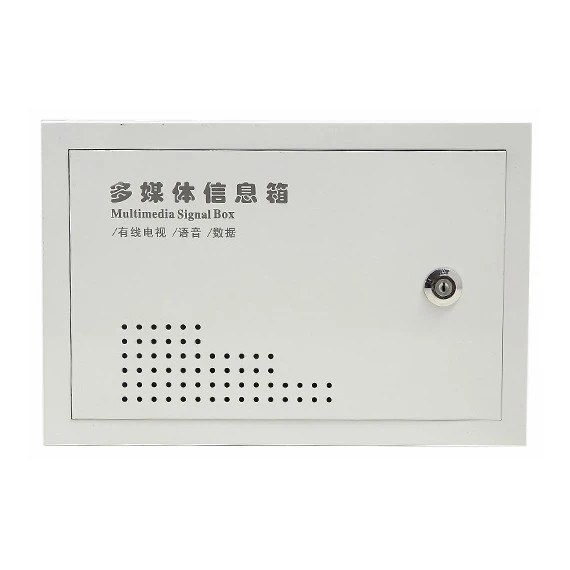
Another product in our range is the Structured Wiring Enclosure. This enclosure is used to organize and protect the wiring in a building's electrical system. It helps keep the wires neat and tidy, making it easier to troubleshoot and maintain the system.
Why Choose Our Distribution Boards
Our distribution boards are made with high - quality materials and are built to last. We follow strict quality control standards during the manufacturing process to ensure that our products are safe and reliable. Our team of experts is also available to provide technical support and advice, whether you're a DIY enthusiast or a professional electrician.
If you're in the market for a distribution board, whether it's for a new construction project or a replacement for an old one, we'd love to hear from you. We can offer you competitive prices and fast delivery times. Contact us today to discuss your requirements and get a quote. We're here to help you find the perfect distribution board for your needs.
References
- Electrical Installation Guide, IET (Institution of Engineering and Technology)
- National Electrical Code (NEC) Handbook